Clinical · neuroscience · VR

Clinical software with the therapist in control

In many clinics a patient's progress is still judged by eye, and each patient's data is scattered across several programs and Excel files. I sit down with therapists and researchers and build tools that run the session, take measurable data from it and leave the clinical decision with the therapist.

The problem

Where a clinic's daily work gets stuck

Therapists know their clinical work. What takes their time is scattered data and tools that were not built for the treatment room.

One patient's data lives in several places

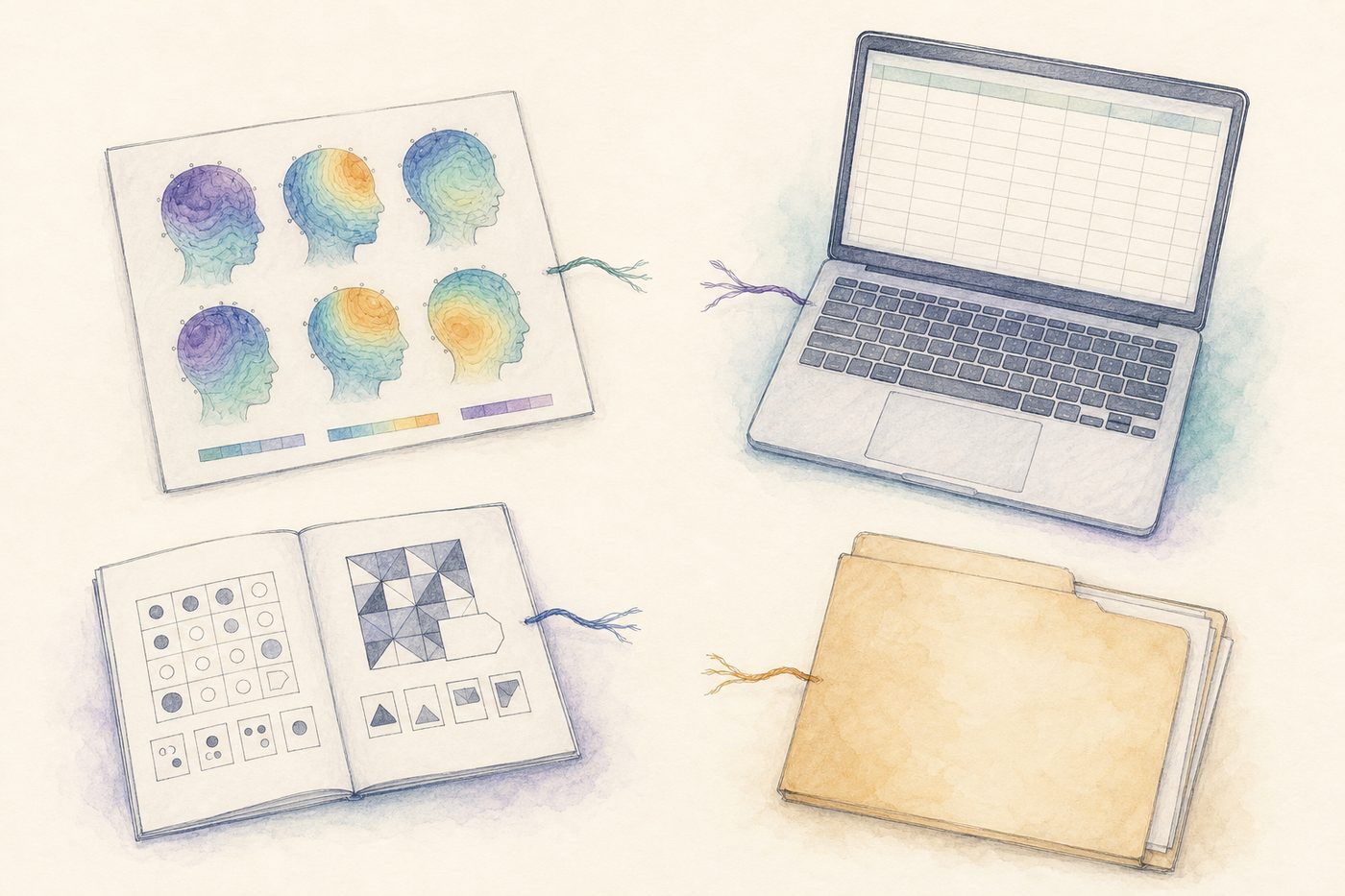
A therapist who wants to see where a patient stands takes the qEEG report from Neuroguide, the CANTAB or Raven result from another program and finds the patient in an Excel file. None of these are connected.

Each test has its own reporting logic, so comparing two visits is more than copying numbers, and someone has to know how to read each one. Seeing a patient's progress over several months means putting the pieces together by hand.

If the clinic is also running research, the same data has to be cleaned and made consistent by hand all over again.

Brain maps, a test booklet, a spreadsheet and a folder on a desk
Figure 1 One patient's data, none of it connected

Repetitive exercises lose the patient

Rehabilitation exercises are repetitive and patients get bored quickly. A therapist cannot take several patients through engaging exercises at once.

At the end of the session there is no precise figure to show the patient and family, and progress is often judged by eye.
The therapist cannot see the body respond

Virtual reality solves part of this and brings a new problem: the therapist can see what the patient is watching but not how the patient's body responds to it.

In a session built around therapy video that response matters, because it is what tells the therapist whether to continue or ease off.

How I work

How a session is run

I start with the session itself. I sit in and see how the therapist really runs it and which decisions must stay with them, because software that does not know this gets left on the shelf.

SyneuraX

One station for every headset

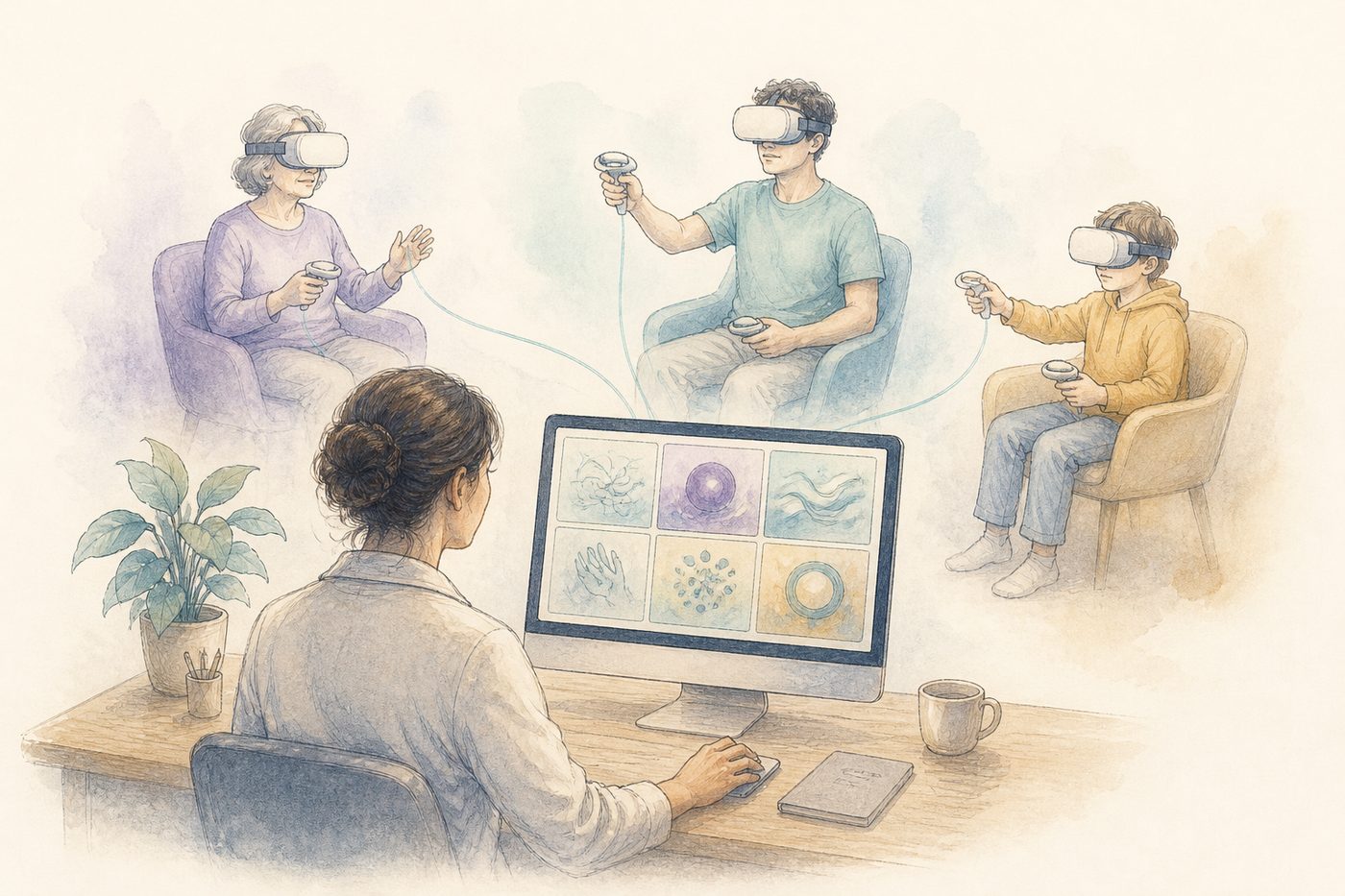
In SyneuraX the patient trains on a standalone Meta Quest headset and the therapist runs every headset from one Windows station, watching the live view of each, adjusting the session on the spot and ending with a report the patient and family can read.

Every session has a prepare phase that is never recorded and a train phase that is, so warm-up does not pollute the data. Each patient resumes from the level the last session reached.

All of it runs on the clinic's own network with no cloud service, so patient data stays in the building. Text inside the headset appears in the patient's own language, taken from their record.

  • 13 clinical exercisesreleased
  • 7 morebuilt and awaiting release
  • 3,501 automated testspassed before release
A therapist at one computer and three patients wearing VR headsets
Figure 2 Concept illustration: a therapist running every headset from one station

Exercises built on established tests

Every exercise is built on an established neuropsychological paradigm, so its numbers carry clinical meaning: Corsi, WCST, Tower of London, Go/No-Go and Trail Making among them.

Clinical staff can author new level sets without writing code and set the goals and time limits of each level.

The decision stays with the therapist

The software makes the therapist more precise and never replaces them. Prescribing, training, measuring, reporting and adapting the next session all happen in one system, under their hand.

Reports come out in HTML, PDF and Excel, and backup and retention are handled at the same station.

Selected work

Two more pieces of this work

These two solve parts of the problem above, from the patient's bodily response to bringing assessments together.

BioVR · 2025

Heart data beside the VR session

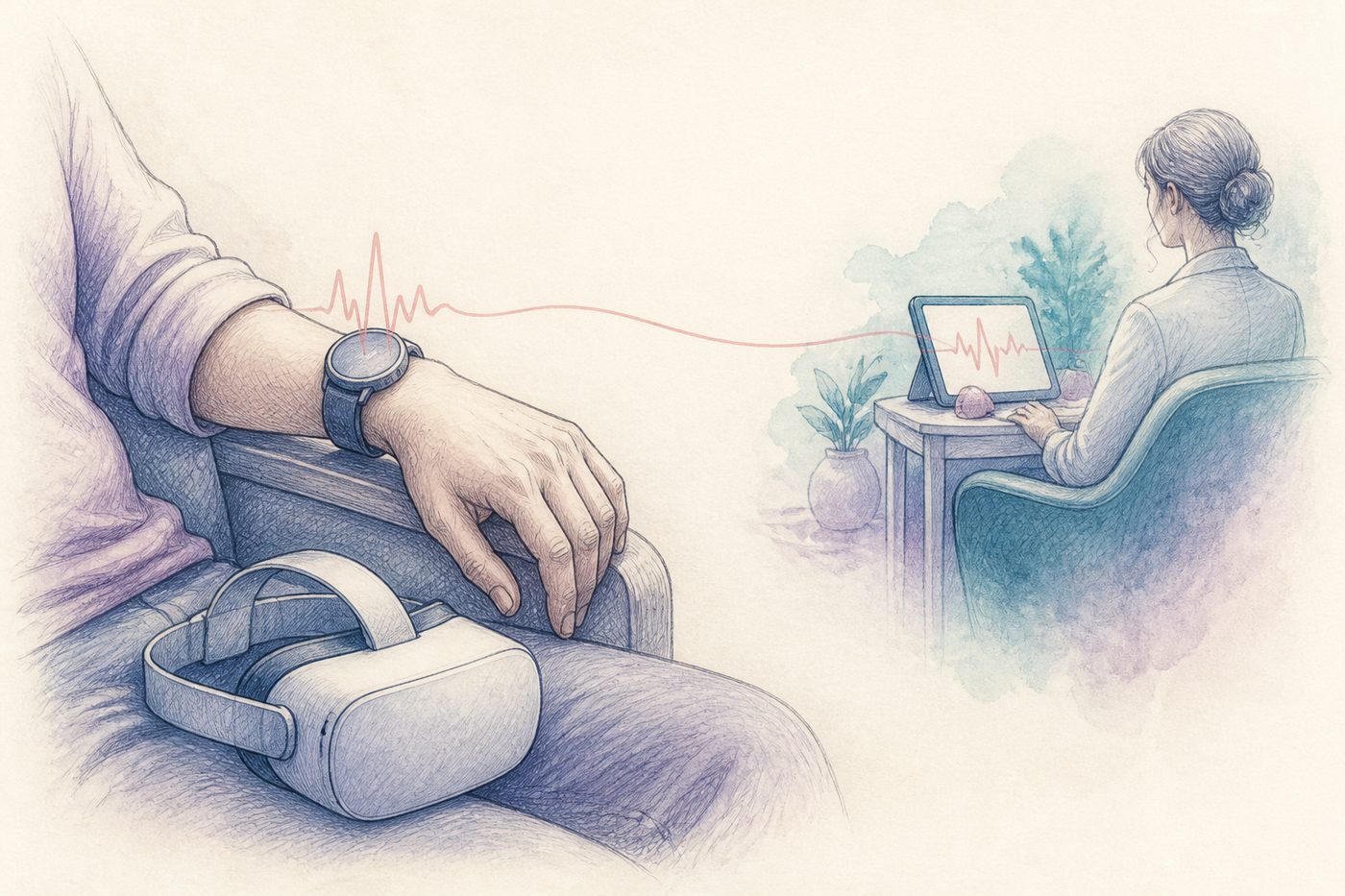
For that problem of the body's response I built BioVR. An app on a Galaxy Watch streams heart rate, beat-to-beat intervals, HRV and the raw PPG signal live to the therapist's console, and the same console controls 360° therapy video on a Quest headset.

HRV is computed on the watch over a window of up to 120 beats, which keeps network traffic small and the metric consistent between sessions. The raw data still reaches the console for later analysis. This research prototype is the groundwork for the biosignal line of SyneuraX.

A pulse line from a smartwatch on a wrist to the therapist's console
Figure 3 Concept illustration: the heart signal travelling from the watch to the therapist's console

Neuroguide · CANTAB · COGBAT · Raven · WISC · Vienna

qEEG and cognitive tests in one record

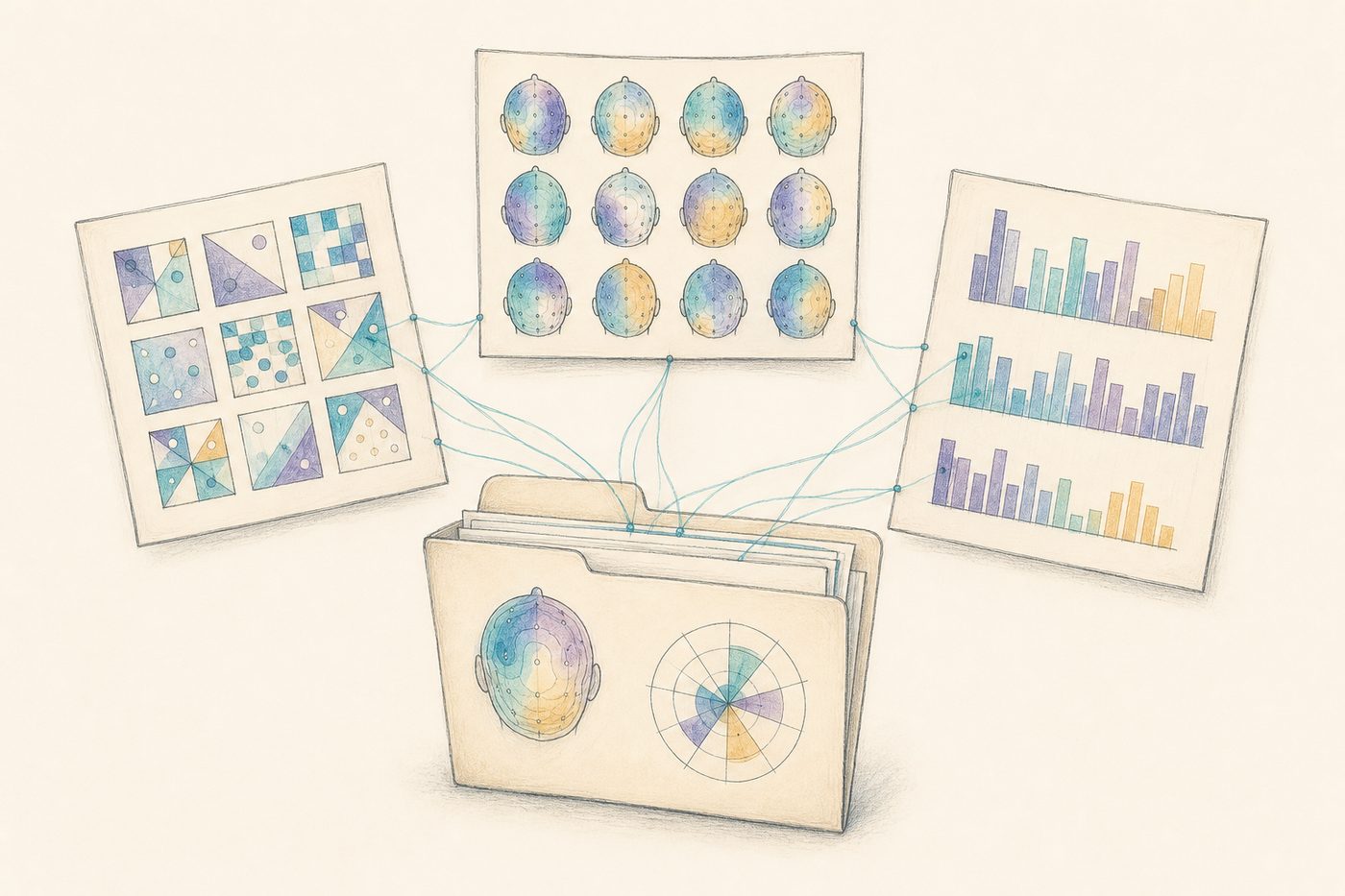
I built a platform that turns Neuroguide qEEG exports into a complete patient record and brings CANTAB, COGBAT, Raven, WISC and Vienna under one roof.

Patient records, multi-protocol settings, separate access for each role and brain-health and radar reports sit together in one bilingual interface, with action logs and report management built for daily clinic use.

Brain maps, test patterns and charts gathered into one folder
Figure 4 Concept illustration: reports and tests gathered into one record

Computational neuroscience is one of my research directions, and one of my WIPO PCT filings (WO 2022/130006) covers prognosis, early diagnosis and best-treatment selection through data fusion and machine learning.

Projects I have built

  1. SyneuraX

    Brain and body rehabilitation in VR, steered live by the therapist.

    Rehabilitation exercises are repetitive, patients lose motivation, and progress is often judged by eye. Clinics had no practical way to run several patients through engaging, measurable exercises while the therapist stayed in control. SyneuraX gives the therapist one station to prescribe, run, watch and adjust VR sessions on many headsets at once, and turns every session into clean, objective data and a report the patient and family can read.
    Project details →
  2. Neuroguide Clinical Parser

    qEEG + cognitive-assessment platform for clinical neuroscience.

    Clinics juggle a Neuroguide qEEG report, separate cognitive batteries (CANTAB/COGBAT/Raven/WISC/Vienna), and Excel patient lists — there is no single, bilingual workflow tying them together. This platform does.

    Project details →
  3. BioVR

    VR therapy sessions with live heart data from a Galaxy Watch.

    A therapist running a VR session can see what the patient is watching but not how the patient's body is responding. BioVR put the heart next to the session: heart rate, beat-to-beat variability and the raw pulse waveform reach the clinician console live, alongside control of the video the patient is watching.

    Project details →

Questions I hear often

Are these certified medical devices?

No. They are tools for running sessions, collecting data and research, and the clinical decision stays with the therapist. If your product needs medical certification, we discuss it from the start so the architecture and documentation fit.

Where is patient data stored?

On infrastructure you choose, usually the clinic's own network. Data that identifies a patient is kept apart from research data.

Does it work with ordinary headsets and watches?

Yes. SyneuraX runs on standalone Meta Quest headsets, and BioVR reads heart data from a Galaxy Watch and needs no lab equipment.

How does an engagement start?

You send a short technical brief and I reply in writing on whether I can help. If I can, we start with a pilot from $600.

Working on a clinical or research tool?

We start with a pilot from $600. Write how sessions are run today, what data you collect and where the work gets stuck, and I will give you the scope and the final price in writing.